



You might be used to hearing that making mistakes is part of the learning process and while that is true, it is also true that you may want to avoid them.
There are common mistakes in English made by speakers of different languages and today I’m going to help you correct them.
1. Saying ‘Discuss about’

Discuss means to talk about something with another person or group in order to exchange ideas or decide something (definition by the Longman Dictionary (https://www.ldoceonline.com/dictionary/discuss).
As you can see, to discuss or talk about are synonyms and that is why we tend to mix them.
What we say: We discussed about the problem.
What we should say: We discussed the problem OR we talked about the problem.
2. Omitting the subject
This common mistake in English is related to the fact that in some languages, such as Portuguese or Spanish, it is okay to omit the subject. However, this is not the case in English.
Even though the subject might be evident for both the listener and the speaker, it is necessary to mention it.
What we say: – Did you like the party?
-Yes, was good.
What we should say: – Did you like the party?
-Yes, it was good.
3. Using less instead of fewer

This is another common mistake in English that is made so often that we actually think it is correct to say less cars or less students but in fact that is not grammatically correct:
What we say: There were less guests at the party.
What we should say: There were fewer guests at the party.
Why?
Because we should use less with uncountable nouns (things that don’t have a plural form, such as water, money, time):
less time, less money, less patience
When we talk about things we can count (thing that do have a plural form, such as cars, students, computers) we should use fewer:
fewer cars, fewer students, fewer computers.
4. Using between instead of among
This common mistake in English is quite frequent among (or between?) non-native speakers.
Between is used when you refer to two things, people, places, times or events. The key here is TWO.
Among (also spelled amongst) is used when you refer to more than two things. The key here is MORE THAN TWO.
What we say: The changes will mean job losses between railway workers.
What we should say: The changes will mean job losses among railway workers.
Because we do not mean just two workers, then you should use among (or amongst).
How can you avoid these common mistakes in English?
- Do write your own examples, those you will remember because they are meaningful.
- When you use any of the examples above, do stop for a moment and give yourself a few seconds to correct them if necessary.
- When you read, pay attention to these words, I am sure they will appear in any kind of text.
- Practice, practice and practice!
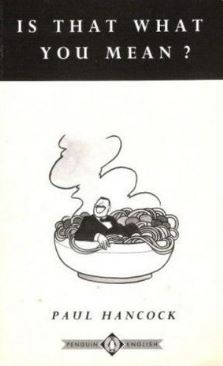
If you want to stop making these common mistakes in English and you are a visual learner, I recommend the following book by Paul Hancock:
Is That What You Mean? In this book, Paul Hancock illustrates the common mistakes in English in a way which makes it easy to remember.
If you need further guidance on how to avoid making common mistakes in English and how to improve, LET’S TALK. Book your free talk with Daiana and she will give you advice on what to do to reach your objectives!
Are you also interested in learning about the common mistakes in Spanish and how to correct them? Check the blog out!
