



I’m sure you have asked yourself this question quite some times when using English to communicate during a conversation, meeting or even when writing an email or text on WhatsApp. Today I will help you answer it to finally understand when you should use the Present Perfect and when the Simple Past.
1. Finished and Unfinished Actions

Actions that started in the past and continue to the present. Words used in this context are for and since.
Example: I have lived here for 10 years now (you still live there)
I have lived here since 1998 (and you still live there)
Example: I have written a few poems.
Can’t you use the Simple Past in the last example?
Yes, you can. Take a look:
Example: I wrote a few poems when I was in school (we refer to a specific point in the past)
I have written a few poems (the focus is on the fact that you can read some poems I have written nowadays, and I might write a few more in the future).
2. Result

No result in the present
When we refer to a finished action with no result in the present time (there is no consequence) then you should use the Simple Past.
Example: I lost my keys. I couldn’t believe it! (I am telling someone what happened to me at some point in the past)
Result in the present
and there is a result in the present.
Example: (Maria is on the phone talking to Pam)
M: Pam, I need your help. I’ve lost my keys and I can’t get into my house, could I go to your place?
3. Experiences
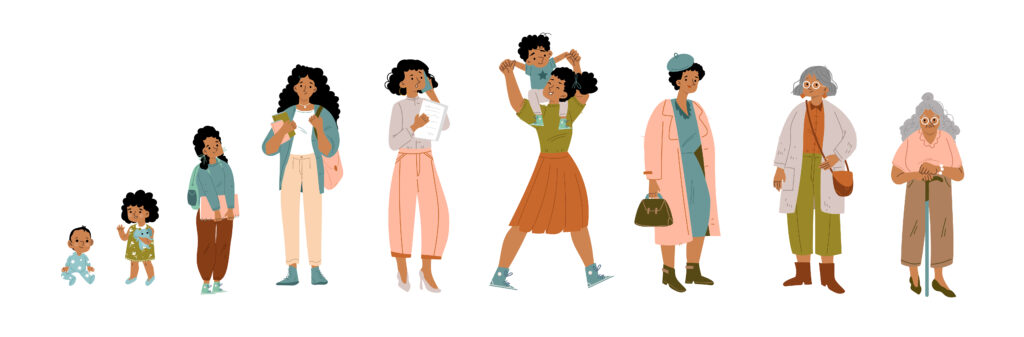
When we talk about experiences in someone’s life we can use both, the Simple Past or the Present Perfect depending on whom we are talking about:
When the person is dead
If it is someone who can’t do that again in his or her life (Nelson Mandela, Shakespeare, my great-grandmother) then we used the Simple Past.
Example: Shakespeare wrote many poems.
When the person is still alive
If we are talking about someone who is alive and can do that activity more times in the future, then we use the Present Perfect.
Example: Susan has visited New York a couple of times. (She can still visit New York more times in the future.)
4. Time Expressions

Finished time expressions
With expressions that clearly refer to the past time, we will use the Simple Past.
– one week/ three months/ two years ago
-last week / month / year
-in 2020 / 1998 / 1890
When + time: when I moved/ when I graduated / when we met for the first time
Example: I saw Sarah last week.
Unfinished time expressions
With expressions that include the present, we will use the Present Perfect
-This week / month / year
Example: I’ve visited John three times this year (I can still visit him more times before the end of the year)
Would you like to learn more? Book your free session with Daiana and LET’S TALK to see if she can help you reach your language objectives.
Don’t miss our blog on Common Mistakes in English and how to Correct them!
